Feeds:
Posts
Comments

“All You Can Do is Breathe”, from Ellen Datlow’s Blood and Other Cravings, is doing rather well.


It’s made the preliminary list for the Stoker Awards, and Paula Guran has just announced the Table of Contents for her Year’s Best Dark Fantasy and Horror. My story is amongst the other gems! Am thrilled to be in this book.

Here’s the full TOC:


• “Hair” by Joan Aiken (The Monkey’s Wedding & Other Stories / F&SF July/August)
• “Rakshashi” by Kelley Armstrong (The Monster’s Corner: Through Inhuman Eyes)
• “Walls of Paper, Soft as Skin” by Adam Callaway (Beneath Ceaseless Skies, Issue #73, July 14, 2011)
• “The Lake” by Tananarive Due (The Monster’s Corner: Through Inhuman Eyes)
• “Tell Me I’ll See You Again” by Dennis Etchison (A Book of Horrors)
• “King Death” Paul Finch (King Death)
• “The Last Triangle” by Jeffrey Ford (Supernatural Noir)
Near Zennor by Elizabeth Hand (A Book of Horrors)
• “Crossroads” by Laura Anne Gilman (Fantasy, Aug 2011)
• “After-Words” by Glen Hirshberg (The Janus Tree and Other Stories)
• “Rocket Man” by Stephen Graham Jones (Stymie, Vol. 4. Issue 1, Spring & Summer 2011)
• “The Colliers’ Venus (1893)” by Caitlin R. Kiernan (Naked City: New Tales of Urban Fantasy)
• “Catastrophic Disruption of the Head” by Margo Lanagan (The Wilful Eye: Tales from the Tower, Vol. 1)
• “The Bleeding Shadow” by Joe R. Lansdale (Down These Strange Streets)
• “Why Light?” by Tanith Lee (Teeth)
• “Conservation of Shadows” by Yoon Ha Lee (Clarkesworld, August 2011)
A Tangle of Green Men, Charles de Lint (Welcome to Bordertown)
• “After the Apocalypse” by Maureen McHugh (After the Apocalypse)
• “Lord Dunsany’s Teapot” Naomi Novak (The Thackery T. Lambshead Cabinet of Curiosities)
• “Mysteries of the Old Quarter” by Paul Park (Ghosts by Gaslight)
• Vampire Lake, by Norman Partridge (Subterranean: Tales of Dark Fantasy 2)
• “A Journey of Only Two Paces” by Tim Powers (The Bible Repairman and Other Stories)
• “Four Legs in the Morning” by Norman Prentiss (Four Legs in the Morning)
• “The Fox Maiden” by Priya Sharma (On Spec, Summer 2011)
• “Time and Tide” by Alan Peter Ryan (F&SF, Sept/Oct 2011)
• “Sun Falls” by Angela Slatter (Dead Red Heart)
• “Still” by Tia V. Travis (Portents)
• “Objects in Dreams May Be Closer Than They Appear” by Lisa Tuttle (House of Fear)
• “The Bread We Eat in Dreams” by Catherynne M. Valente (Apex Magazine, Issue 30, November 2011)
• “All You Can Do Is Breathe” Kaaron Warren (Blood & Other Cravings)
• “Josh” by Gene Wolfe (Portents)

Zombie vs Robots

The first Zombie vs Robots story is live!  It’s written by Brea Grant, Dexter actress!

My story, “The River of Memory”,  is due out on March 2. I’m considering throwing a party. Come as a zombie, or a robot, and I’ll feed one lot offal and the other lot Irn Bru.

http://idwpublishing.com/zvr/

These are the stories and writers upcoming:

Brea Grant — “Pammi Shaw: Creator of Gods and Also Blogger” (1/20/12)
UnderCity’s lone survivor continues her blog and meets (creates?) a digital deity with its own ideas about fighting the zombie apocalypse.

Brea Grant is sometimes a writer (We Will Bury You; Suicide Girls), sometimes an actress (Heroes; Dexter; Halloween 2) and all-the-time a nice person. She is currently directing her first film.

Steve Rasnic Tem — “To Denver (with Hiram Battling Zombies)” (1/27/12)
What happens when high-test chronic is tainted with potent zombie blood? Will it be a high to die for?

Multiple award-winning author Steve Rasnic Tem has published over 300 short stories in the areas of fantasy, science fiction, crime, and horror. His latest novel is Deadfall Hotel.

Nancy A. Collins — “Angus: Zombie-Versus-Robot Fighter” (2/03/12)
A young man is trained by his scientist father to fight zombies, robot-style. What could go wrong?

Nancy A. Collins is the author of numerous novels and short stories, including the best-sellingSunglasses After Dark, and was a writer for DC Comics’ Swamp Thing. She is a recipient of the Bram Stoker and British Fantasy Awards, and has been nominated for the World Fantasy, Eisner & International Horror Guild awards. Left Hand Magic, the newest installment in the acclaimed Golgotham series, is now available.

Nick Mamatas — “Throckmorton’s Bad Day” (2/10/12)
Years before the zombie apocalypse, an enterprising and amoral young college student (later to become “Dr. Throckmorton in the ZVR comics) tests experimental street drugs on the local users. The results will have unforeseen consequences for his future self.

Nick Mamatas is the author of several unusual novels, including The Damned Highway with Brian Keene, and The Last Weekend. His short fiction has appeared in Asimov’s SF, Long Island Noir and many other magazines and anthologies.

Amber Benson — “Mademoiselle Consuela and Her Army of One” (2/17/12)
Like a princess locked in a tower, Consuela lives on a secluded island with only her loyal warbot for company. Then the pirates come…

Amber Benson is an actor, filmmaker, novelist and amateur occultist who sings in the shower. Best known for her work as Tara Maclay on Buffy The Vampire Slayer, she is also the author of the Calliope Reaper-Jones series and the co-director (with Adam Busch) of the feature film, Drones.

Don Webb — “The Wizards vs. the Bots” (2/24/12)
Can black magic control zombies? What about warbots?

Don Webb has 20 published books ranging from the nonfiction occult classic Uncle Setnakt’s Nightbookto the best weird west book, Webb’s Weird Wild West.

Kaaron Warren — “The River of Memory” (3/02/12)
An Amazon goddess thinks she can restore humanity to zombies; a warbot has doubts.

Kaaron Warren is an award-winning horror and science-fiction writer based in Australia. She has two short story collections and three novels in print.

Lincoln Crisler — “Kettletop’s Revisionary Plot” (3/09/12)
A distraught scientist travels back in time in a desperate attempt to save his wife and prevent the discovery of the deadly Z Virus.

Lincoln Crisler is author, editor and reviewer as well as an active-duty soldier in the United States Army. His books include Magick & Misery and Wild. He is the editor of the dark-superhero anthology Corrupts Absolutely? He has served as a contributing writer for The Horror Library and Shroud Magazine.

Sparks: Dan Abnett

Dan Abnett is an amazing writer. He writes action scenes that play out before your eyes like a movie. He’s funny, clever and he’s my son’s favourite author. Here, he discusses where his sparks come from. I’m exactly the same; so many of my ideas come when I’m sitting in that stasis of public transport.


“My ideas come by train. And bus. Mostly train. Public mass transport, basically. I presume they buy their own tickets.

When I first started writing, even in a vaguely professional capacity, I was commuting in and out of London for work. Daily journeys on trains, on the Tube. It was the only time I got to think, the only enforced free time between a full day at work and a full night of writing. This was, of course, during the Punic Wars, before the advent of laptops or smartphones. Yes, we had pencils. Yes, we did. But there wasn’t much opportunity to sit and write on a crowded South Eastern commuter train. So I’d sit and think instead.

Ideas do come from other places. Sometimes I wake up in the middle of the night and find them on the pillow, and sometimes, sometimes, I actually deliberately think them up. With my brain.  After twenty-five years, I have honed the requisite professional skills to actually be able to sit down and, at will, during regular business hours, come up with fit-for-purpose ideas ready to be used in commissions. It’s a learned skill. Like riding a bike. Or cutting keys. Or cobbling.

But some of the best ideas are the ones that come out of nowhere and mug you. Or the ones you find at the back of the drawer (before you look, it’s a metaphorical drawer). Or the ones that apport into the middle of your kitchen floor during an otherwise ordinary afternoon.

Or the ones that arrive by train.

What do I do with them? I seize them! I seize them, I say, and I clap them in chains! …Well, I write them down for later use. I think you know when a spontaneous, unbidden ideas is a corkingly good one, just as you know that if you don’t record its finer points fast, before it fades like a waking dream,  it will just be a memory shaped like a good idea, the moulded space in which a good idea once fitted, rather than a working good idea that you can use because all the plugs and adaptors, and the instructions, are still in the box.  Before I learned to write things down, to recover them and prepare them for a later use, I lost many because of the foolish notion that I would remember them when I got home or needed to use them. Sometimes I remembered the idea, but not the point, the one tiny detail that made the idea usable and good. Sometimes, all I remembered was that I’d had an idea. I am still haunted by the memory of forgotten ideas from years ago, by the empty shaped spaces. And I have a good memory.

Why trains? I’d say because the world goes by. It’s not a specific and focused inspiration, like a good book or a newspaper feature, it’s just a series of views, a moving panorama of nonspecific life, none of it intended for, or prepared for, observation. It just goes by. There are either subliminal hooks buried in it, or it’s simply enough to have a moving, non-static visual feed to get my brain firing. Like ambient visuals.

I must learn to get on trains more often, to deliberately seek out the resource rather than accidentally use it because I happen to be going somewhere. The endorsements speak for themselves. This summer, I had, at one point, three big jobs that needed to have ideas developed for them so I could submit and pitch. I wasn’t exactly struggling, but the ideas were not coming out cleanly. I had to go up to London for a signing, and on the train ride home – a journey of just fifty-five minutes – I ‘received’, without trying, without effort, all three, one after another.

I wasn’t even thinking about the pending jobs.

From my house, if the wind’s in the right direction, I can sometimes hear trains passing through the local station. Buses grumble by the retaining wall at the end of my quiet street.

I think they’re trying to tell me something.”


Dan Abnett is a New York Times bestselling author and an award-winning comic book writer. He has written over forty novels, including the acclaimed Gaunt’s Ghosts series, the Eisenhorn and Ravenor trilogies,  The Silent Stars Go By (the 2011 Christmas Doctor Who novel), Triumff: Her Majesty’s Hero, and Embedded. He lives and works in Maidstone, Kent. Dan’s blog and website can be found at www.danabnett.com

and you can follow him on Twitter @VincentAbnett


I chose Kirstyn McDermott’s “She Said”, from Scenes From the Second Storey, as the best horror fiction published in Australia last year and gave it an Australian Shadows Award. She has an incredibly liquid way of writing about nightmarish things. She’s one of the best writers of tactile fiction I know. Here, she talks about another brilliant story, “Frostbitten”.


“It’s hard for me to pinpoint the first sparks from which any particular story took light. I tend to view the conception part of my creative process as something akin to walking through a junkyard. I pick up odd and interesting bits and pieces along the way and shove them into my pockets for later use. Sometimes I lose them. Sometimes I never do figure out what to do with a particular piece. But sometimes I’ll reach into my pocket and realise that two or three bits of junk that I’ve been carrying around for ages actually fit together. And then I still have to sit down and try to figure out the rest of their story as I write it.


Occasionally, though, there is a distinct spark to which I can point and say, “Look. That thing, there. That’s where this came from.”


“Frostbitten” (published by Ticonderoga Publications in More Scary Kisses) was one such story. The central image came from the tail end of a dream, what little I could snatch into consciousness when I awoke one morning. Two naked women, stuck together and pulling slowly away from each other, their skin tearing red and raw as they did so. It was such a striking image, but not one that came bundled with any particular feelings of horror or revulsion. The women, I knew, loved each other and were in that situation because they loved each other. The rest of the dream was lost but the image, and the sense of love and sacrifice that accompanied it, remained with me for the rest of the day. By late afternoon, I knew who the women were and had their story almost entire in my head. Two days later, it was finished – the fastest I have ever written a story from conception to completion.


If only they all came that easily . . .”


The Grinding House

Very thrilled to announce that 40kPublishing have produced an e-version of my Ditmar-award winning novella “The Grinding House”.  Here’s the launch blog post from them.

This novella began when I found out I had Spurs in my heels.  Researching that completely freaked me out. Bone, growing in tendrils. I had the image of the bones fusing smoothly, and that idea made me feel claustrophobic.

I recognise certain influences when I read it back now. There is a moment where a character says, “Don’t blame you,” and this comes from a man who was seen around Canberran city streets a decade or so ago. He was very tall, disheveled, with broken glasses taped together and pants too short for him. He clutched piles of papers; his poetry. He tried to sell but no one would buy. I never saw anyone be cruel to him. It was always, “No, thank you,” and a quick walk away from him. He always said, “I don’t blame you,” and this is what broke my heart. I bought a poem once. Purely out of pity. It wasn’t very good.


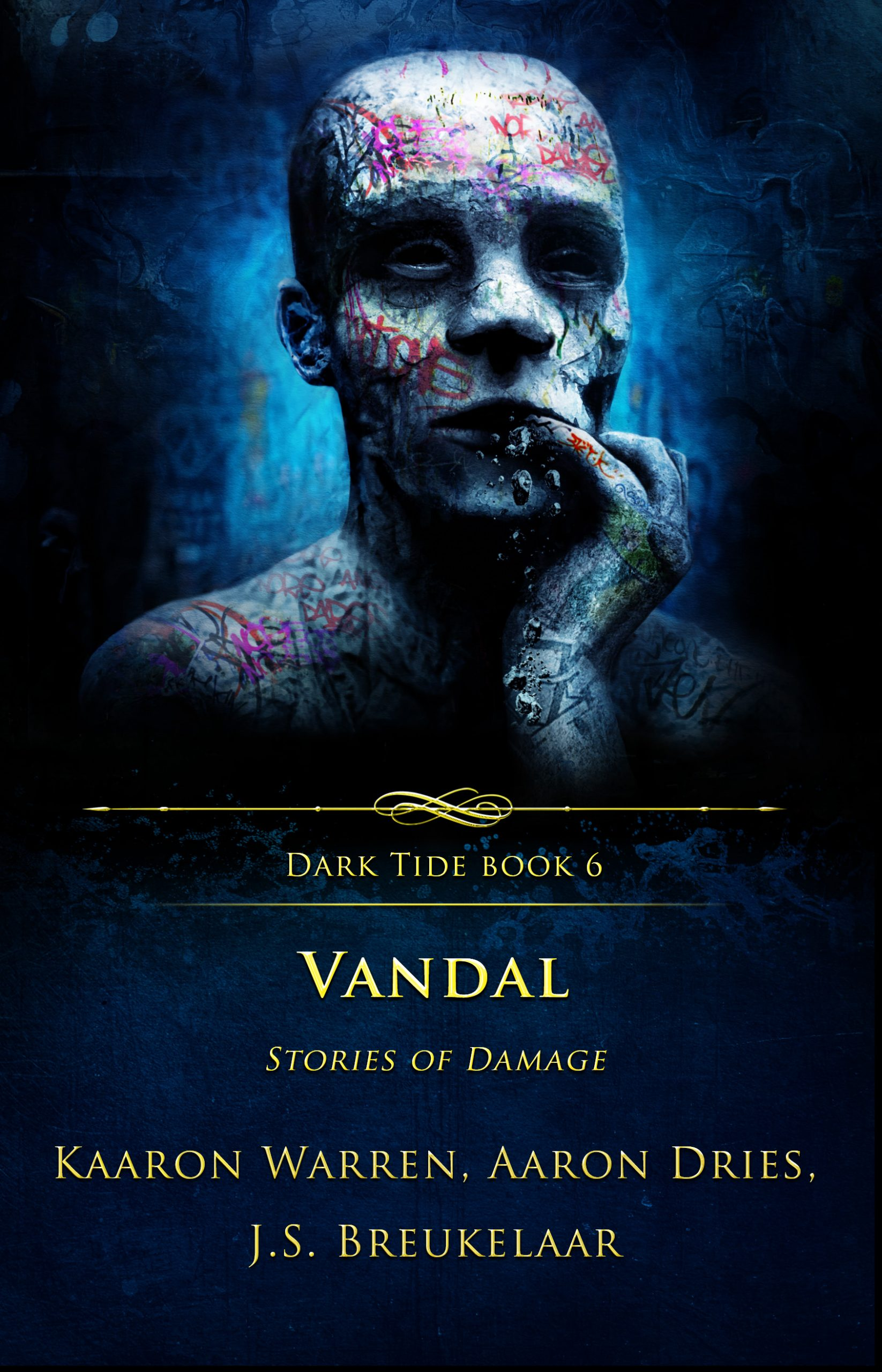
The cover is gorgeous:


John DeNardo at SF Signal has a giveaway!

A lot of their books look and sound amazing. I’ll be purchasing some for my new Kindle, that’s for sure.

Sparks: Allyson Bird

Allyson Bird is one of those writers who see things in many layers. She has a sharp vision and a dark, dark turn of words.  She has an almost filmic way of writing, I think, so that a story plays itself out very visually.


“Three sparks that started some of my stories off…

The idea for In a Pig’s Ear from Bull running for Girls came from a real project where scientists were able to grow pig’s wings. In the story Stella Kiefer explains what she is doing.

‘I was now working on three projects. My main line of research was concerned with residual DNA. I experimented with pig DNA and there was also my little fertility programme. It was old hat to grow a pig’s ear. I was a little more adventurous and wanted to see if I could grow a wing from bone marrow stem cells on to bioabsorbable polymers. I never got tired of trying to grow them into different shapes and coming up with ever more complex designs. Last time they came out like bat’s wings and this time I was aiming for a structure of wing like the extinct gliding reptile, the pterosaur. That would take more time. Some experts said that birds evolved from little feathered dinosaurs but I had always quite liked the hypothesis that birds diverged from reptiles before dinosaurs, and that mammals had evolved from reptiles with the propensity for genetic change that could lead to flight. A whole new take on pigs can fly—perhaps they could, given the right wings, hollow bones and a more developed muscle structure.’

Then I thought of H.G. Wells Dr Moreau and realised that what would happen next would end in a similar location….

‘The Amazon canopy was heaven with these tiny winged angels that looked like Sistine Chapel cherubs with their ruddy complexions and winning ways. I adored them all. They were perfect. Each generation grew their wings earlier and earlier, and the wing structure became stronger as they glided from branch to branch. It was not me that gave them the name Homo angelus—but it stuck.’

Vulkodlak in Wine and Rank Poison was my response to internet trolls, sock puppets and to malicious people who use anonymous, pseudonymous reviews or even their real names to achieve their goal.

‘Vesna wrote. “I’m here to talk about werewolves.”

I’ll show her what I know, thought Stefan. And if she couldn’t play the game he’d sort her. For a few minutes they chatted amiably and then he decided to bait her a little to see if she was good enough to even think of putting pen to paper on his favourite subject. He could see Susiewolf skulking in the background coming forward with the occasional contribution then backing off quickly when he turned on her and gave her a warning snap. Alpha male. He thought of himself as alpha male. He would come back later after he had finished with Vesna to see if he could get a rise out of her. She was always fair game. This new one, Vesna, he’d get her…bring her down, make her look small. He might keep to being anonymous. He liked to hide behind a different name now and again, too.

From a new story The Beat Hotel. This one is hopefully going to be in the Joe Pulver R. W. Chambers homage anthology A Season in Carcosa. Spent a few weeks engrossing myself in The King in Yellow and other stories. Thought about decadence and looked at the lives of the beat generation. The King in Yellow and the latter seemed a perfect combination. A man from a strange relationship I was in once makes an appearance, too…inevitably.

‎’What happened to Kaja and her book of Human Songs? Had there been anything sweet in them? Human. Returned to dust. Or be black and white. So white. Thousands of doves flying together against the snow and one black rock in the way. Obsidian. Pearl. Sand…and finally glass. Dozens of thick, dark green glass panes in a window with the reflection of one gone now within each.’

News of varying kinds.

I talk to Lynda Rucker at  Sinescope about women writing in horror.

Ishtar is released! The amazing three novella anthology from Gilgamesh Press, with stories from me, Cat Sparks and Deb Biancotti.

I’ve been invited as a Special Guest to the Australian National Convention, which will be held in Canberra in 2013, as Conflux 9.  International Guest of Honour is Nalo Hopkinson, Editor Guest is Marc Gascoigne, Australian Guest is Karen Miller and Fan Guest is Rose Mitchell. It’s going to be a lot of fun and I’m hoping to see a lot of overseas people in Canberra for this one!

More news soon!


Aliette de Bodard, another Angry Robot author, has an almost magical ability to bring history alive on the page and make the unreal real. Here, she talks about her series Obsidian and Blood, and the process she went through to develop the storyline.


“One of the advantages of having a series with a historical backdrop is that this provides ready-made inspiration in the form of various events: my Obsidian and Blood trilogy is set in the Aztec Empire in 1480, a fraught time when the Empire was nearing its maximum extension, but already showing the political weaknesses that would eventually doom it at the conquistadores’ hands. 1480 happens to be the date when the long-lived Emperor Axayacatl died–and the inevitable tussle for power that follows a monarch’s death formed much of the background for book 2 in the series, Harbinger of the Storm.
When I tackled the sequel, Master of the House of Darts–which would also be the last book in the trilogy–I naturally hunted for what had happened after the designation of a new Aztec Emperor. It turns out that the new ruler was meant to go on a coronation war, the success of which would prove his fitness to rule. It also turns out that the 1481 coronation war was a major disaster, quite possibly the only coronation war in Aztec history to have finished into an ignominious retreat. The Aztecs, a warrior culture, naturally interpreted this as the displeasure of the gods; and the new Emperor was made much weaker by this initial setback.
“This was perfect for Master of the House of Darts: its predecessor had ended with the selection of the new ruler; this book would open with the ruler’s utter failure to manage the Aztec Empire–a neat way to keep the stakes high, and to tie in with the previous book in the series.
“Unfortunately, I had few details of  that time period: I completed this inciting event by as much as I could, by researching the personalities of the various people in presence. For instance, the young commander of the army, Teomitl (a major player in my series), was known for his hot temper, and his preference for war over political intrigues (he is recorded as marching with his soldiers and sharing their life on the rough). Many of those traits ended in the plot: Teomitl is beloved by his soldiers, but impatient, and utterly inept at peace-time court life. Having all this information helped me narrow down my plot options, by having the fictional characters compose with the reactions of the historical ones.
“However, something still wasn’t quite clicking. Though I could work forward from my inciting event and open up the plot, it all felt too mechanical, and I had the feeling that I was painting Aztec murder by the dots–something I absolutely wanted to avoid, as writing the same book over and over would have been a disaster for the series.
“It took me a while to realise that I had fallen into another series pitfall: because the cast and universe were already well in place, I had locked myself into a mindset where I wanted to keep the status quo rather than move the story forward. I didn’t want my characters to fall out, to attack each other, or even to have competing agendas–and this just wouldn’t work as a book: people getting on well together is marvellous, but as a source of plot it is a rather dry business.
In the end, I gave myself permission to work out the consequences with no holds barred. That was I realised that my characters would have fundamentally different responses to the opening events of the novel, and that the logical conclusion was the opening of rifts between them–not small quarrels, but deeper animosities that wouldn’t be solved so easily.
“Those rifts that open, not only within the Empire, but also within allies, ended up driving most of the plot: Master of the House of Darts is, first and foremost, a book about consequences spiralling out of control, and I borrowed many of its arcs from tragedy: it’s obvious that disaster looms, but many of the characters cling to their convictions, until everything hangs in the balance.
“The only thing I did not borrow from tragedy was the ending, because I had no intention of killing off my entire cast just for the sake of narrative fittingness (and I have always found the Greek tragedy endings a tad unrealistic, the other side of the coin compared to the “happy endings for everyone”, and equally unbalanced)
“But the ending is nevertheless harrowing, and painful; and it is clear when the last page turns that things have altered fundamentally, and that there will be no coming back to more carefree times.
“Quite possibly, this is why I hated the book while I was writing it, because I put myself as much through the wringer as my characters. But, in the end, I think it’s definitely a stronger book because I burrowed deeper; and it’s most definitely a lesson I’ll remember for future books.”

Sparks: Jason Nahrung

I loved Jason Nahrung’s story in ‘Dreaming Again’, and to me this spark explains why it has such heart.
‘Smoking, Waiting for the Dawn’ (Dreaming Again) is set in an askew Wyandra, an outback town reduced now to little more than a pub, a post office/store/cafe and a few houses. The idea for the story arose out of a road trip that I took with my father, who spent his formative years in the region. He was hoping to catch up with old mates from that time, but as we asked around, a couple had moved on, but most had died. It was a sad return and a very emotional sign that an era had passed. I added roo shooters, now government contractors hunting undead, because vampires can be wonderfully melancholic symbols of the past still haunting the present.

Sparks: Chesya Burke

Chesya Burke is a deceptively kindly writer. She draws you gently into the personal world of her stories, then hits you with harsh realities, vicious imagery and heart-breaking endings.

I met Chesya Burke this year at Readercon, having heard of her through Laird Barron’s rave review of her short story collection “Let’s Play White“.  You can read an excerpt of the story she discusses by clicking on the link.


“The story idea for The Teaching and Redemption of Ms. Fannie Lou Mason has dual meaning for me.  I grew up in a small town in Kentucky, called Hopkinsville. Doubtless, just as many of the classic stereotypes of typical small towns are true about Hopkinsville, as are wrong.


But it does have a rich history of ghost and supernatural happens. The well-known Edgar Cayce was from Hopkinsville and I grew up with my family telling stories about experiences with other worldly things, both dead and mystical.


I’ve always been intrigued by Edgar Cayce’s supposed ability.  I’m also fascinated by the idea of twins.  Binary beings, whose every thought and action are understood wholly by another person. But I thought: what if that very connection made it possible for them to reach out to others in the same way?


Although I don’t talk about it much, a few years ago, my 16 year old sister died from congestive heart failure while running track at her high school. (LINK: http://www.horsegroomingsupplies.com/horse-forums/r-i-p-shadvina-iona-leavell-loved-105312.html)  Of course it was devastating and we started a campaign to put respirators in all schools in the state.  She was a twin. She shared a connection with her twin (my sister) that is difficult for me to explain, even as a writer.


I decided instead to explore the idea in fiction.  The Teaching and Redemption of Ms. Fannie Lou Mason was the result.


The story is about twin girls in the early 20th century who share the dual roles of supporting their community; just as Cayce did those many years ago.  For me, whether Edgar Cayce could predict the future was irrelevant once I understood that he gave an entire community (and in many ways, the country) hope.


The same is true, I think, for my twins in the story.  Sure, their community is in jeopardy, but in the end, they offered hope and release to a broken town and people.


I’d like to think the same can one day be said for my sisters, the twins.”


Older Posts »

Follow

Get every new post delivered to your Inbox.